
Overview of SAT Scores
The SAT consists of two main sections: Evidence-Based Reading and Writing (EBRW) and Math, each scored between 200 and 800, combining for a total score of 400–1600. To estimate your score, you need to:
1. Convert raw scores to scaled scores (EBRW and Math).
2. Add section scores for your final composite score.
| Math Raw Score | Math Scaled Score | EBRW Raw Score | EBRW Scaled Score |
|---|---|---|---|
| 58 (Perfect) | 800 | 52 (Perfect) | 800 |
| 50 | 700 | 45 | 700 |
| 40 | 600 | 35 | 600 |
| 30 | 500 | 25 | 500 |
How the SAT Test Score Calculator Works
Each of these SAT sections is scored on a scale of 200 – 800, with the total SAT score ranging from 400 – 1600. The SAT test score calculator will use a specific algorithm that has been developed based on the scoring system employed by the College Board, the organisation that administers the SAT.
According to the College Board’s official documentation, the scoring process involves complex calculations to convert raw scores (the number of correct answers) into scaled scores. The SAT test score calculator replicates this process as closely as possible to provide you with an accurate prediction.
Specific explanation of the SAT test score calculator
When you input your answers from a practice test into the calculator, it first tallies up the raw score for each section.
In the EBRW section, for instance, each correct answer adds one point to your raw score, while incorrect and omitted answers generally do not subtract points (although there are some nuances in the actual SAT scoring).
The same principle applies to the Math section, where correct answers boost your raw score. Once the raw scores for both sections are calculated, the calculator then uses a conversion table, similar to the one used by the College Board, to convert these raw scores into scaled scores. This gives you a clear picture of where you currently stand in terms of your SAT performance.
Benefits of Using an SAT score calculator
Identify Strengths and Weaknesses
One of the most significant benefits of using an SAT score calculator is that it allows you to identify your strengths and weaknesses.
By seeing how your scores break down across different sub-sections of the EBRW and Math areas, you can focus your study efforts more effectively.
For example, if the calculator shows that you’re scoring low on the Math problem-solving and data analysis questions, you know that this is an area where you need to spend more time practising.
Help to Set Realistic Goals
The SAT test score calculator helps you set realistic goals. Instead of aiming for an arbitrarily high score, you can use the calculator to determine how much improvement you need to make in each section to reach your target overall score.
This gives you a clear roadmap for your SAT preparation journey. For instance, if you’re currently scoring 1000 on the practice tests and your dream university requires a score of 1200, the calculator can show you how many more correct answers you need to get in each section to bridge that gap.
Reduces Test Anxiety
Another advantage is that it reduces test anxiety. When you have a better understanding of what your scores mean and how you can improve them, you feel more in control of the situation.
Instead of going into the actual SAT exam feeling overwhelmed and unsure, you can approach it with confidence, knowing that you’ve taken the necessary steps to prepare as effectively as possible.
How to Use an SAT Test Score Calculator Effectively
Simply inputting answers does not lead to the most benefit. Strategic use of the SAT test score calculator requires understanding both your current standing and how to leverage score insights for targeted improvements.
Take Timed Practice Tests Under Realistic Conditions
Before using a score calculator, complete a full-length practice SAT replicating official time limits and conditions. This authentic setup ensures your raw scores are meaningful inputs.
Allocate specific time each day or week to study for the SAT, and make sure to cover all the different sections and topics. You can use the insights from the score calculator to determine how much time to spend on each area.
Make a habit of taking practice tests every 2-3 weeks and running your scores through the calculator. Consistent testing with score analysis is key to steady improvement.
Analyse Your Scoring Breakdown
Look beyond the overall scores and adjust study focus by using score calculator insights. Examine performance trends on question types, such as data interpretation, algebra, or grammar. Meanwhile, identify sections with the widest gap to your target score.
Pay attention to which questions you missed and allocate more time for timing-intensive sections if missed questions stem from rushing. For example, if your math grades lag because you have no time to calculate or think, you should increase the time for math practice while maintaining your reading ability.
Read More: How Math SAT Score Calculator Predicts and Improves Your Results
Working with a tutor or study group
A tutor can provide personalised feedback based on your practice test results and the scores calculated by the SAT test score calculator. They can help you understand the concepts you’re struggling with and teach you effective test-taking strategies. Similarly, a study group allows you to discuss difficult questions with your peers, share study tips, and learn from each other’s experiences.
Combining the Calculator with Other Study Strategies
The SAT test score calculator is a powerful ally in your quest for a top-notch SAT result, but its true potential is unlocked when combined with a range of other study strategies. By integrating these approaches, you create a comprehensive and effective study plan that can significantly boost your performance on the exam.
Creating a well-structured study schedule.
One of the most important strategies to pair with the calculator is creating a well-structured study schedule. According to a study by the Educational Testing Service, students who follow a regular study routine tend to perform better on standardised tests like the SAT.
When you use the SAT test score calculator to identify your areas of strength and weakness, you can then allocate specific time slots in your schedule to focus on improving those weaker areas.
For example, if the calculator reveals that you struggle with the grammar and punctuation questions in the Writing and Language section of the SAT, you can set aside an hour each day to study grammar rules, practice identifying errors, and write sample essays.
This dedicated time allows you to systematically work through your weaknesses and gradually improve your skills.
Study with useful study materials
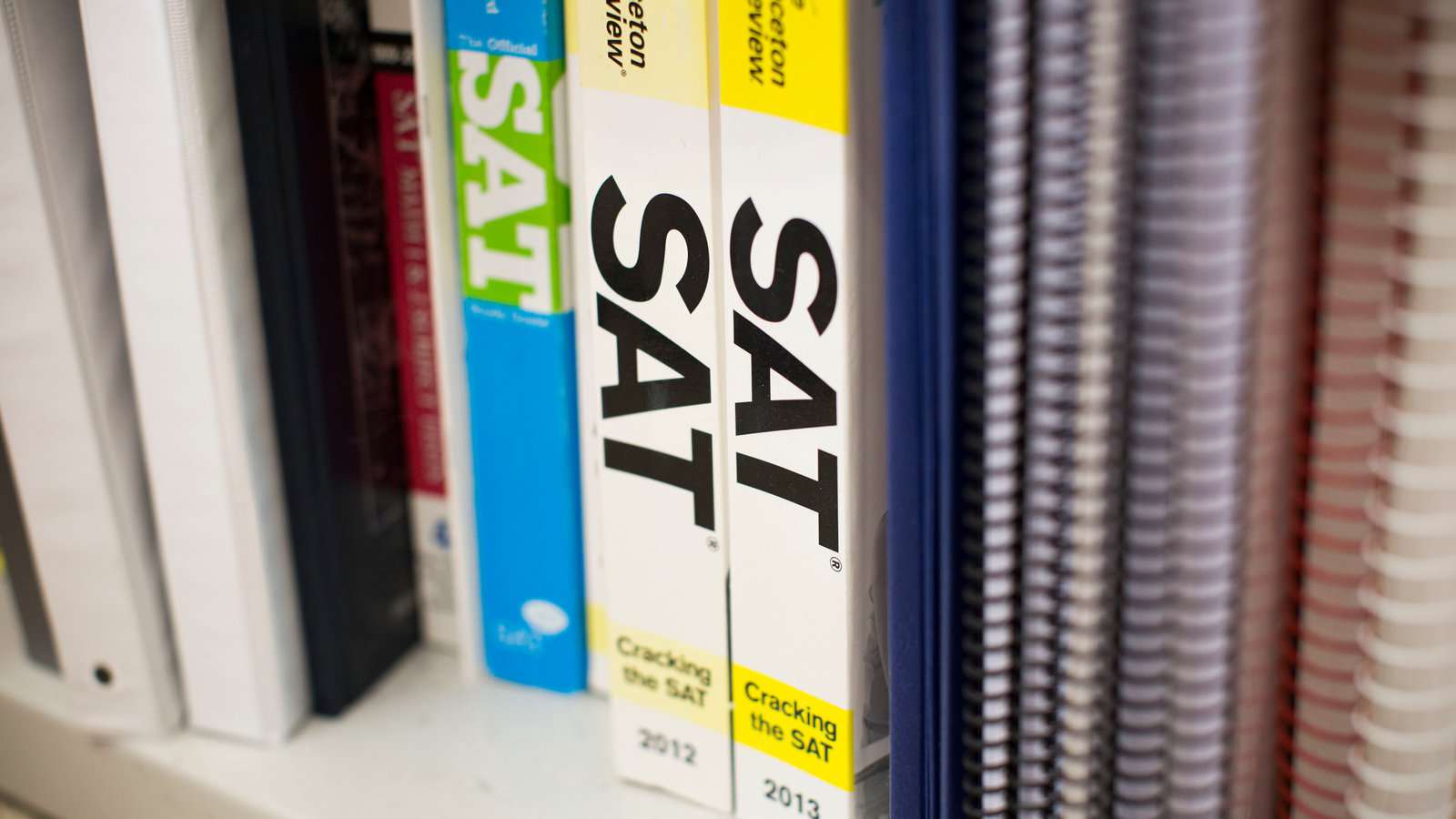
Utilising a variety of study materials is also crucial. SAT prep books are a staple resource. They often contain detailed explanations of the test format, practice questions, and tips for success.
Many well-known publishers, such as Kaplan and Princeton Review, create comprehensive prep books that cover all aspects of the SAT.
Online courses are another excellent option. Platforms like Khan Academy, which has partnered with the College Board (the organisation that administers the SAT), offer free, high-quality SAT prep courses. These courses include video lessons, practice exercises, and personalised study plans.
Flashcards are handy for memorising vocabulary words, math formulas, and grammar rules. You can create your flashcards or use pre-made sets available online or in stores.
By using a combination of these study materials, you can reinforce your learning and ensure that you have a well-rounded understanding of the SAT content.
While the SAT test score calculator provides valuable insights into your current performance, it is the combination of this tool with other study strategies that truly enables you to maximise your results.
Tips for Using the SAT Test Score Calculator Effectively
To get the most out of the SAT test score calculator, it’s essential to use high-quality practice tests. The closer these practice tests are to the real SAT in terms of format, content, and difficulty level, the more accurate your score estimate will be.
1. Find official SAT practice tests
Official SAT practice tests on the College Board’s website are highly recommended as they are developed by the same organisation that creates the actual SAT.
2. Take multiple practice tests and use the calculator after each one
This way, you can track your progress over time. You might notice that your scores are improving in some areas while remaining stagnant in others. This information can help you adjust your study plan accordingly.
For example, if you see that your EBRW score has increased significantly after focusing on reading comprehension strategies but your Math score hasn’t changed much, you can shift more of your study time to Math.
Don’t just focus on the overall score.
Pay close attention to the sub-scores within each section. For example, in the EBRW section, there are sub-scores for reading, writing and language. Understanding where you’re excelling and struggling at this granular level can provide even more targeted insights for your study.
Online Tools Combined with the SAT Test Score Calculator for Effective Study
SATonline APP
It is an all-in-one online education platform for the SAT, integrating online mock exams, evaluation analysis, and online learning. It has a Mini Test feature designed by former SAT question-setters and international education experts.
By answering 20 questions, students can quickly estimate their SAT scores. It also has a large number of real-exam questions from the past six years, which are updated six times a year.
Students can first use the SAT test score calculator to set a target score, and then use the Mini Test in the SATonline to estimate their current level. According to the analysis report provided by the APP, they can understand their weak points and carry out targeted practices. After a period of study, use the calculator again to see if the score has improved and adjust the learning plan accordingly.
DESMOS Calculator
DESMOS is a powerful graphing calculator. It can be used to plot function graphs, find roots, and find intersections. The SAT exam, especially in the math section, is very helpful for solving problems related to functions, equations, and inequalities.
The SAT machine-based test Bluebook software has a built-in calculator with the same interface as DESMOS. Students can also download the DESMOS app or use it online through the website.
When using the SAT Test Score Calculator to analyse the wrong questions in the math section, if it is found that there are problems in function-related questions, DESMOS can be used to draw function graphs to visually understand the properties and changes of functions, and to find solutions to the problems.
For example, when solving polynomial function or exponential function problems, you can use DESMOS to plot graphs and find the roots or intersection points of functions, which helps to improve the accuracy and speed of problem-solving.
Khan Academy
Khan Academy is a well – known online learning platform that provides a large number of free learning resources, including video tutorials, practice questions, and learning plans for the SAT.
The learning content is systematically arranged and gradually progresses from basic knowledge to advanced problem-solving skills. It covers all aspects of the SAT, such as reading, writing, and math.
Use the SAT Test Score Calculator to identify areas where scores need to be improved, and then go to Khan Academy to find relevant learning content.
For example, if the calculator shows that the score in the reading comprehension part is low, you can watch the video tutorials on reading skills on Khan Academy and do relevant practice questions.
Conclusion
FAQs
Are SAT score calculators accurate?
How hard is the SAT?
The SAT challenges a student’s aptitude in reading, writing, and mathematics. Its difficulty varies among individuals based on their academic level. While some find the math section challenging, others may find the reading or writing sections more demanding.
How long should I study for the SAT?
Most experts agree that students should spend approximately 5 to 20 hours each week for about three months studying for the SAT. The total number of hours is greatly dependent on each student’s individual goals.

As the lead contributor to this platform, I bring over 15 years of experience navigating the dynamic landscape of higher education. Through this platform, I deliver rigorously researched content on emerging trends in studying abroad, lifelong learning and cross-cultural competency development. Every article integrates practical knowledge, study resources, and case studies that empower stakeholders to make informed decisions.
- This author does not have any more posts.