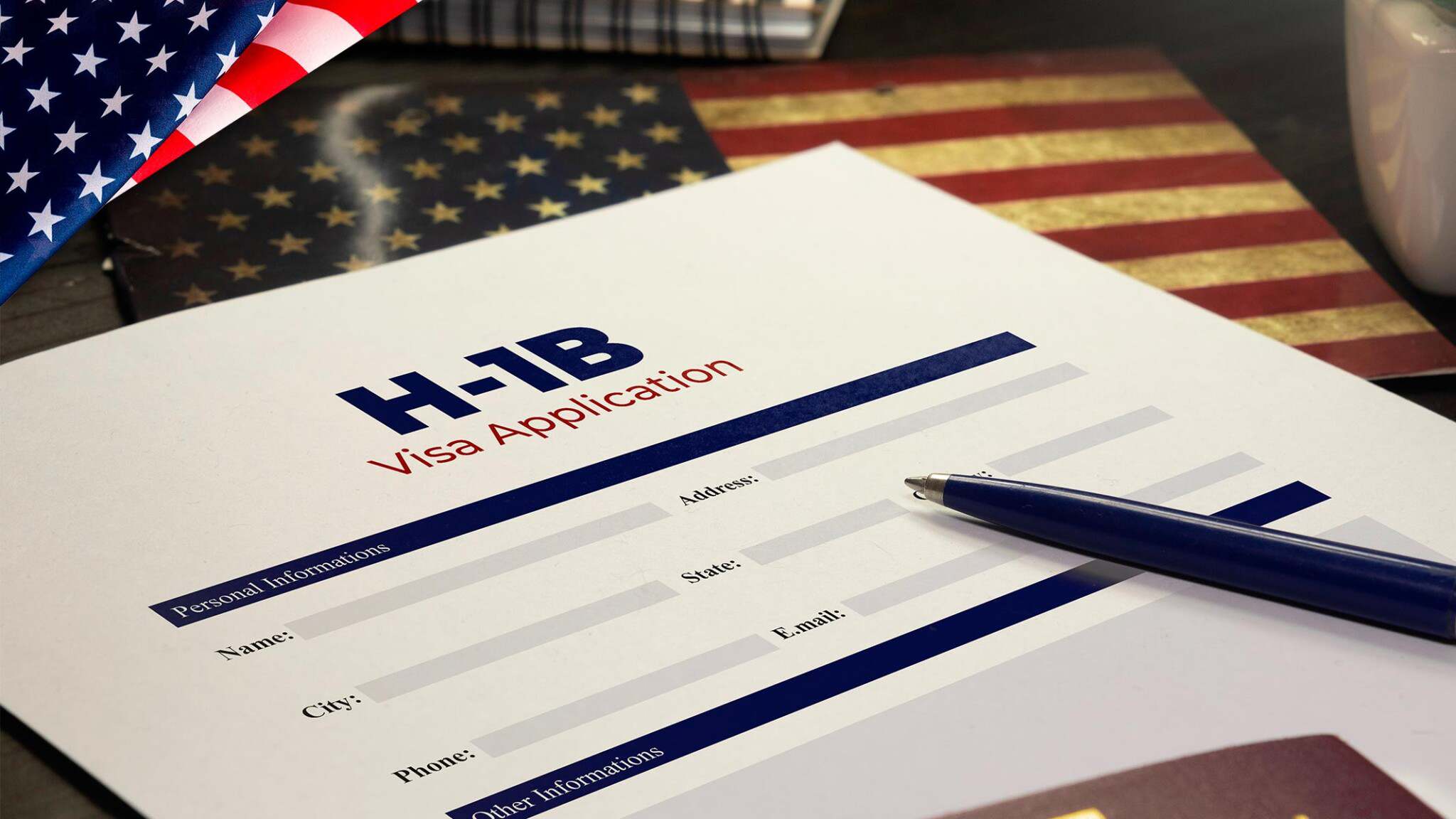
Many skilled professionals pursuing American work opportunities wonder whether their H1B visa requires IELTS certification to demonstrate English proficiency.
The relationship between H1B visa applications and English language testing isn’t always straightforward, and understanding whether your H1B Visa Needs IELTS or not can significantly impact your application strategy.
Understanding H1B Visa and Its English Proficiency Requirements
The U.S. immigration system offers a range of visa options designed to attract talented individuals and support economic growth.
One of the most well-known categories is the H-1B visa, intended for workers in speciality occupations that require a bachelor’s degree or equivalent experience.
This visa allows U.S. employers to hire foreign professionals in fields such as technology, engineering, and healthcare, fostering innovation and filling critical skill gaps.
The annual cap of 85,000 H-1B visas (including 20,000 reserved for graduates of U.S. universities) ensures a balance between meeting employer needs and prioritising opportunities for domestic talent, while also welcoming global expertise (U.S. Citizenship and Immigration Services, 2024).
Successful H-1B applicants often enjoy stable employment with reputable companies, and the visa can serve as a stepping stone to permanent residency for many.
H1B Visa’s English Proficiency Requirements
While IELTS (International English Language Testing System) serves as a widely recognised benchmark for English proficiency worldwide, the H1B visa English proficiency requirements operate differently from other immigration pathways.
Therefore, knowing when and why you might need to prove your English skills becomes crucial for a successful application.
The H1B visa programme doesn’t explicitly mandate IELTS scores as part of the standard application process. However, this doesn’t mean English proficiency isn’t important.
Rather, the H1B visa English test mandatory status depends on various factors, including your educational background, work experience, and employer requirements.
Unlike student visas or permanent residence applications, the H1B speciality occupation criteria focuses primarily on your professional qualifications and the job’s complexity.
Nevertheless, since H1B positions require a bachelor’s degree or equivalent work experience, employers naturally expect candidates to demonstrate adequate English communication skills.
Furthermore, during the H1B visa application process in 2025, immigration officers may assess your ability to perform job duties effectively. This assessment can include reviewing how well you can communicate in English within your professional field.
Does an H1B Visa Application Need an IELTS score?
There’s no federal requirement stating that H1B visa applications must include IELTS scores. However, several scenarios might make English proficiency testing beneficial or necessary.
Primarily, your employer might request English proficiency proof as part of their internal hiring process. Some companies implementing employer-sponsored H1B English assessment procedures prefer standardised test scores to evaluate candidates fairly.
Additionally, if your educational credentials come from non-English speaking institutions, demonstrating English proficiency can strengthen your application.
Moreover, certain consulates might request additional documentation during visa interviews, particularly if they have concerns about your English communication abilities.
While this isn’t common, having IELTS scores ready can provide reassurance during the interview process.
Read More: Minimum New Zealand Student Visa IELTS Requirements: Study in New Zealand
H1B Visa IELTS Exemption Criteria
Several circumstances can exempt you from needing IELTS for H1B visa applications.
Understanding these H1B visa IELTS exemption criteria helps you determine whether additional English testing is necessary.
Educational Background Exemptions
If you’ve completed your degree from an English-speaking institution, particularly in countries like the United States, the United Kingdom, Canada, Australia, or New Zealand, you’re typically exempt from additional English testing.
The logic here is straightforward – completing higher education in English demonstrates sufficient language proficiency.
Students who ask “Can I get an H1B without IELTS if I have a US degree?” can feel confident that their American education serves as adequate proof of English proficiency.
Similarly, those wondering “Does a master’s degree in English waive IELTS for H1B?” can rest assured that advanced degrees in English-speaking environments eliminate the need for additional testing.
Read More: Exploring Immigration Without IELTS Countries: Practical Paths
Professional Experience Considerations
Extensive work experience in English-speaking environments also supports your case.
If you’ve worked for multinational companies where English served as the primary business language, this experience demonstrates practical language proficiency that often surpasses standardised test scores.
English-Speaking Country Passport Holders H1B Advantages
Citizens from English-speaking countries enjoy certain advantages regarding H1B visa language proficiency proof.
These individuals rarely face questions about their English abilities, given their native speaker status or extensive exposure to English education systems.
Countries typically recognised for native English proficiency include the United Kingdom, Ireland, Canada, Australia, New Zealand, and South Africa. Passport holders from these nations can confidently proceed with H1B applications without worrying about additional English testing requirements.
However, even native speakers should prepare to articulate their qualifications clearly during visa interviews. Immigration officers want to ensure that applicants can perform their job duties effectively, regardless of their language background.
Alternatives to IELTS for H1B Visa Applicants
When employers or circumstances require English proficiency demonstration, several alternatives to IELTS for H1B visa applicants exist. These options can be more convenient or better suited to your specific situation.
TOEFL as an Alternative
Many professionals wonder about using the TOEFL score for H1B visa eligibility instead of IELTS.
Both tests measure English proficiency effectively, and most employers accept either certification. TOEFL might be more readily available in certain regions or align better with your testing preferences.
The key consideration when choosing between these tests involves understanding your employer’s preferences and the test format that suits your strengths.
Some candidates perform better on computer-based tests (TOEFL iBT), while others prefer the face-to-face speaking component in IELTS.
Read More: IELTS vs PTE vs TOEFL Score Comparison: Which Test is Right for You?
Professional Certifications and Credentials
Your professional background can serve as compelling evidence of English proficiency.
Industry certifications, professional licences, or memberships in English-speaking professional organisations demonstrate practical language application in your field.
For instance, those asking “H1B visa IELTS exemption for software engineers” should know that technical certifications from major technology companies often carry significant weight.
These certifications require a comprehensive understanding and practical application.
What Is the Minimum IELTS Score for H1B Visa Eligibility?
Since there’s no official government requirement, the question “What is the minimum IELTS score for H1B visa eligibility?” doesn’t have a standard answer. However, when employers do request IELTS scores, they typically expect band scores reflecting professional English proficiency.
Most employers seeking IELTS scores for H1B positions expect overall band scores of 6.5 to 7.0, with individual section scores (listening, reading, writing, speaking) meeting minimum thresholds. These scores demonstrate the ability to handle complex professional communication effectively.
Nevertheless, remember that IELTS score validity for H1B stamping follows the test’s standard two-year validity period. Planning your testing timeline ensures your scores remain current throughout the application process.
How to Meet H1B Visa English Requirements Without IELTS
Understanding how to meet H1B visa English requirements without IELTS opens up practical pathways for busy professionals. Several strategies can effectively demonstrate your language proficiency without formal testing.
Academic Transcripts and Credentials
Your H1B visa educational credentials serve as primary evidence of English proficiency when obtained from English-medium institutions.
Official transcripts showing successful completion of courses taught in English provide concrete proof of your language abilities.
Additionally, if you’ve published research papers, articles, or professional content in English, these publications demonstrate advanced language skills that often exceed standardised test requirements.
Employer Letters and Professional References
Proving English proficiency for H1B with an employer letter represents another viable approach.
Previous employers can provide detailed references highlighting your communication skills, presentation abilities, and professional English usage.
These letters become particularly valuable when they specify your role in English-speaking teams, international projects, or client-facing positions.
Such documentation provides real-world evidence of your practical English application.
Are There H1B Visa Categories That Don’t Need English Tests?
Certain H1B visa categories inherently require less emphasis on formal English testing. Understanding these distinctions helps you navigate the application process more efficiently.
Cap-Exempt Positions
Universities, non-profit research organisations, and government research facilities often sponsor H1B visas without stringent English testing requirements.
These employers typically focus more on technical qualifications and research capabilities than standardised language scores.
Speciality Occupation Considerations
The H1B speciality occupation criteria emphasise technical expertise and educational qualifications.
Positions requiring advanced technical knowledge often place less emphasis on formal English testing, particularly when candidates demonstrate clear professional competency.
H1B Visa Documentation Requirements Beyond English
While addressing English proficiency concerns, it’s essential to understand comprehensive H1B visa documentation requirements.
Your application’s success depends on presenting a complete, well-organised package of supporting materials.
Essential Documentation
Your H1B employer sponsorship documents form the foundation of your application. These include the Labour Condition Application (LCA), Form I-129 petition, and supporting evidence of your qualifications and the job requirements.
Additionally, educational credential evaluations, professional licences, and work experience letters strengthen your overall application.
When these documents demonstrate extensive English-language education or work experience, they effectively address language proficiency concerns.
Professional Visa English Proficiency Waiver Possibilities
Some circumstances warrant professional visa English proficiency waiver consideration. Understanding these possibilities helps you present the strongest possible application.
International Business Experience
Extensive experience in international business environments, particularly with English as the working language, can support waiver requests.
This experience demonstrates practical language application that often exceeds formal test capabilities.
Published Work and Professional Recognition
Publications in English-language journals, conference presentations, or professional recognition in English-speaking contexts provide compelling evidence of advanced language proficiency.
Planning Your H1B Application Strategy
Successful H1B applications require strategic planning that addresses all potential concerns, including English proficiency.
1. Start by honestly assessing your language background and identifying the strongest evidence of your English abilities.
2. If you attended English-medium educational institutions or have extensive professional experience in English-speaking environments, compile comprehensive documentation highlighting these qualifications.
3. Consider obtaining professional references that specifically address your communication skills and English proficiency.
4. For those considering formal English testing, research your prospective employer’s preferences and plan testing timelines to ensure scores remain valid throughout the application process.
Remember that preparation time can significantly impact your test performance.
H1B Visa Attorney Consultation Benefits
Navigating complex language requirements often benefits from H1B visa attorney consultation.
Immigration lawyers provide personalised guidance based on your specific circumstances and help identify the most effective approach for demonstrating English proficiency.
Experienced attorneys understand which documentation carries the most weight with immigration officers and can help you present your qualifications most effectively.
They also stay current with changing policies and can advise on emerging trends in H1B adjudication.
Job Recommendations for Applying for an H-1B Visa without an IELTS Score
To maximise your chances of securing H1B sponsorship without IELTS, focus on industries and roles where English proficiency is either inherent to the position or less likely to be a formal hiring criterion.
Technology and Information Technology (IT)
The technology sector is the largest employer of H-1B visa holders, accounting for over 40% of all approved petitions in recent years.
Roles such as software developers, data scientists, AI engineers, and cybersecurity analysts are in high demand.
These positions emphasise technical expertise—proficiency in programming languages (e.g., Python, Java), cloud platforms (AWS, Azure), or machine learning frameworks—over formal language testing.
Companies like Amazon, Microsoft, and Google consistently rank among the top H-1B sponsors, often hiring candidates based on their technical portfolios, coding assessments, and project experience rather than IELTS scores.
Remote or hybrid roles in tech also offer flexibility, as communication may rely more on written documentation (e.g., code, reports) than verbal interaction.
Engineering and Applied Sciences
Engineering disciplines—including mechanical, electrical, and civil engineering—are well-aligned with H-1B eligibility.
Employers in sectors like aerospace, automotive, and renewable energy prioritise applicants with advanced degrees, certifications (e.g., Professional Engineer licensure), and hands-on experience with design tools (e.g., AutoCAD, MATLAB).
Similarly, roles in biotechnology, chemistry, and environmental science often require specialised knowledge rather than language credentials.
For example, research scientists working in laboratories or R&D teams may communicate primarily through technical reports, peer-reviewed publications, or data analysis, minimising reliance on spoken English assessments.
Healthcare and Life Sciences
The healthcare industry faces persistent shortages in specialised roles, making it an ideal sector for H-1B applicants.
Physicians, nurses, pharmacists, and medical researchers are frequently sponsored, particularly in areas with critical workforce gaps (e.g., rural or underserved communities).
While clinical roles may involve patient interaction, employers often prioritise medical training, licensing exams (e.g., USMLE for physicians), and clinical rotations over IELTS scores.
Additionally, roles in health informatics, biostatistics, or medical device development emphasise analytical and technical skills, further reducing language barriers.
Finance and Business Services
Positions in accounting, financial analysis, management consulting, and data analytics are also viable for H-1B sponsorship.
Companies like Ernst & Young, Deloitte, and JPMorgan Chase frequently hire foreign professionals with expertise in financial modelling, auditing, or regulatory compliance.
These roles often involve written communication (e.g., financial reports, client proposals) and quantitative analysis, where English proficiency is assumed through education and work experience rather than formal testing.
Academia and Research
University professors, researchers, and postdoctoral fellows in fields like computer science, engineering, and natural sciences often qualify for H-1B sponsorship.
Academic institutions prioritise publications, grants, and teaching experience, with language requirements often waived for candidates who have studied or worked in English-speaking environments.
For example, a researcher hired to lead a robotics lab or teach advanced mathematics would be evaluated on their academic achievements and technical capabilities, not their IELTS score.
Maximising Your Chances of Success
To leverage these opportunities effectively, consider the following strategies:
Optimise Your Resume and Portfolio
Highlight technical skills, certifications, and projects that align with H-1B-eligible roles.
For IT professionals, include GitHub repositories or coding challenges; engineers should showcase design projects or patents.
Target Employers with a Track Record of H-1B Sponsorship
Research companies known for hiring international talent. According to 2024 data, top sponsors include Amazon, Cognizant, and Tata Consultancy Services. Platforms like LinkedIn and Glassdoor often indicate companies’ willingness to sponsor visas.
Utilise Optional Practical Training (OPT)
International students on F-1 visas can gain U.S. work experience through OPT, which often leads to H-1B sponsorship. STEM graduates benefit from a 36-month OPT extension, providing ample time to secure a job offer.
Network Strategically
Attend industry conferences, join professional associations (e.g., IEEE for engineers, ACM for computer scientists), and connect with alumni from your university who have successfully obtained H-1B visas.
Consult Immigration Experts
Work with an immigration attorney to ensure your job offer, employer, and documentation meet USCIS requirements. They can also help address any potential concerns about English proficiency indirectly, such as through letters from previous employers attesting to your communication skills.
Addressing Potential Concerns
While IELTS is not required, some employers might informally assess English proficiency during interviews. To prepare:
1. Practice Technical Interviews: Focus on role-specific questions (e.g., coding challenges, case studies) rather than language drills.
2. Highlight English Proficiency Indirectly: Mention coursework, publications, or presentations conducted in English.
For example, a candidate with a master’s thesis written in English or conference papers published in English-language journals can demonstrate competence without an IELTS score.
3. Leverage Work Experience: Prior roles involving client interaction, team collaboration, or project management in English-speaking environments provide tangible evidence of communication skills.
Conclusion
Understanding whether your H1B visa requires IELTS requires careful consideration of your circumstances, educational background, and employer requirements.
While there’s no universal mandate for English testing, demonstrating strong communication abilities remains crucial for H1B success.
Remember that each H1B visa case is unique, and what works for one applicant might not suit another’s situation.
By understanding the various pathways for demonstrating English proficiency and preparing thoroughly, you can confidently navigate the question of whether your H1B visa needs IELTS certification.
FAQs
Can Employers Require IELTS for H1B Visa Sponsorship?
While there’s no legal mandate, employers maintain the discretion to establish their hiring criteria, including English proficiency requirements. Some companies implement standardised English testing as part of their recruitment process to ensure consistent evaluation across candidates.
However, reasonable employers typically accept alternative forms of English proficiency proof, especially when candidates present compelling educational or professional backgrounds.
Can I get a job in the USA without IELTS?
There is no requirement for IELTS certification for obtaining work visas in the USA. However, good English proficiency is a key to success in the US job market.
Can international students apply for an H-1B visa?
No. An employer must initiate the application process on behalf of the employee. A student must find a job with an employer who will petition for the H-1B.

As the lead contributor to this platform, I bring over 15 years of experience navigating the dynamic landscape of higher education. Through this platform, I deliver rigorously researched content on emerging trends in studying abroad, lifelong learning and cross-cultural competency development. Every article integrates practical knowledge, study resources, and case studies that empower stakeholders to make informed decisions.