Hey there, future business tycoons! Understanding the ESSEC Business School Singapore acceptance rate is crucial for prospective students like you to plan the business education journey in Asia. First things first: that ESSEC Business School Singapore acceptance rate isn’t just a number—it’s your golden ticket decoder ring.
As more international students recognise the exceptional quality of education offered at this prestigious institution, the acceptance rate has become increasingly competitive. So, ready to turn those odds in your favour? Let’s dive in!
Understanding ESSEC Singapore’s Overall Competitiveness
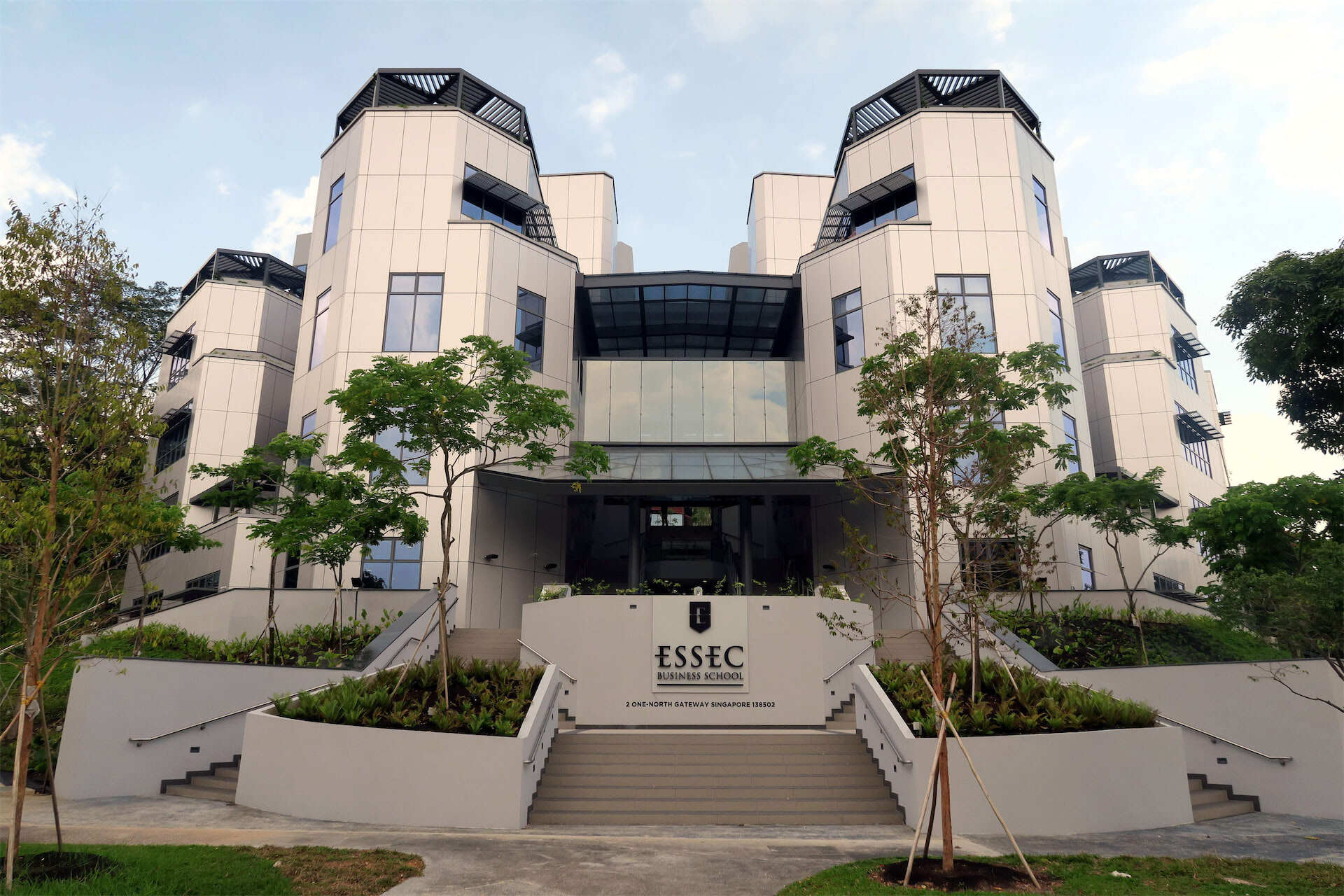
Located in the heart of Singapore’s financial district, ESSEC’s Asia campus has established itself as a gateway to both European excellence and Asian opportunities. Moreover, the school’s unique positioning allows students to benefit from French business education heritage whilst gaining exposure to the dynamic Asian market.
Ranking #28 in Full-time MBA Rankings-Global 2025, ESSEC Singapore Business School’s reputation for excellence stems from its strong connections with major multinational corporations and its innovative curriculum that blends French business education traditions with Asian market insights.
The school maintains selectivity standards that reflect its prestigious reputation in the global business education landscape. Therefore, ESSEC Singapore’s competitiveness has intensified significantly over recent years.
Additionally, ESSEC Singapore attracts candidates from over 50 countries, creating a diverse and intellectually stimulating environment. This international appeal directly impacts admission statistics, as the school can afford to be highly selective in its admission process.
Understanding these competitive dynamics is essential for prospective applicants.
ESSEC Singapore MBA Acceptance Rate by Programme
Master’s in Management Programme
The Master in Management programme represents one of ESSEC’s flagship offerings at the Singapore campus.
Typically, this programme maintains an acceptance rate between 15-20%, making it highly competitive among business school programmes in Asia.
However, the exact figures can vary depending on the strength of the applicant pool each year.
Successful candidates often demonstrate exceptional academic performance, relevant work experience, and strong leadership potential.
Additionally, the programme seeks students who can contribute meaningfully to classroom discussions and benefit from the international learning environment.
MBA Programme Selectivity
The ESSEC Singapore MBA selectivity reflects the programme’s elite status in the region.
The MBA programme generally accepts approximately 10-15% of applicants, positioning it among the most selective business programmes in Southeast Asia.
The MBA programme particularly values candidates with substantial work experience, typically requiring a minimum of three years of professional experience.
Furthermore, successful applicants often possess strong quantitative skills and demonstrate clear career progression goals.
Specialised Master’s Programmes
ESSEC Singapore also offers various specialised master’s programmes, each with distinct acceptance rates.
The Finance programme, for instance, tends to be particularly competitive due to Singapore’s status as a financial hub.
Subsequently, programmes in Digital Innovation and Luxury Brand Management also attract significant interest from global applicants.
These specialised programmes often have acceptance rates ranging from 20-30%, though this can vary based on programme capacity and applicant quality in any given year.
ESSEC Business School Singapore Admission Statistics
Recent Admission Trends
The current acceptance rate for ESSEC Business School Singapore’s MBA programme hovers around 12-15%, making it one of the more selective business programmes in Asia.
Application volumes have increased by approximately 20% over the past three years, while class sizes have remained relatively stable. Therefore, this figure represents a slight decrease from previous years due to the increasing application volumes and maintained class sizes.
This trend reflects growing recognition of ESSEC Singapore’s quality and the increasing appeal of Singapore as an educational destination.
Furthermore, the post-pandemic recovery has seen renewed interest in international business education.
Demographic Breakdown
Current student demographics showcase significant diversity, with students representing over 40 nationalities.
The largest contingents typically come from France, India, China, and Southeast Asian countries, though exact proportions vary by programme.
Gender distribution has achieved near parity across most programmes, reflecting broader trends in business education.
Additionally, the average age of admitted students varies by programme, with MBA students averaging 27-29 years and Master’s students ranging from 22-25 years.
Improving Your 2025 Chances: ESSEC Application Process Strategy
Understanding the ESSEC Application Process
The ESSEC application process requires careful planning and strategic execution.
Successful applicants typically begin preparing 12-18 months before their intended start date, allowing sufficient time for test preparation, essay development, and recommendation gathering.
The application typically includes academic transcripts, standardised test scores, essays, recommendation letters, and often an interview component. Each element requires careful attention and should reinforce consistent themes about your candidacy.
Moreover, understanding programme-specific requirements and tailoring your application accordingly significantly improves admission chances.
ESSEC Singapore Interview Preparation Tips
ESSEC Singapore interview preparation tips centre on demonstrating cultural awareness, leadership potential, and clear career goals.
Interviews typically explore your motivations for choosing ESSEC Singapore specifically and how you plan to contribute to the learning community.
Successful candidates prepare by researching current faculty, understanding programme curriculum details, and articulating specific reasons for choosing the Singapore campus over alternatives.
Additionally, demonstrating knowledge of Asian business trends and Singapore’s economic landscape often impresses admissions committees.
Practice discussing your career goals with specific examples and timelines, showing how ESSEC Singapore fits into your broader professional development strategy.
ESSEC Business School Singapore Admission Requirements 2025
Academic Prerequisites
The ESSEC Business School Singapore admission requirements 2025 emphasise strong academic foundations.
Applicants must hold a bachelor’s degree from a recognised institution with a minimum GPA requirement that varies by programme.
Generally, the ESSEC GPA requirements hover around 3.0 on a 4.0 scale, though competitive programmes often see admitted students with significantly higher GPAs.
International applicants must also demonstrate English proficiency through IELTS or TOEFL scores.
Additionally, some programmes may require specific prerequisite courses in mathematics, economics, or business fundamentals.
Read More: IELTS vs PTE vs TOEFL Score Comparison: Which Test is Right for You?
Standardised Test Requirements
The GMAT score for ESSEC Singapore admission varies by programme, with MBA candidates typically needing scores above 650 for competitive consideration.
However, exceptional candidates with strong professional backgrounds may sometimes gain admission with slightly lower scores.
Meanwhile, Master’s programmes often accept GRE scores as alternatives to GMAT, providing flexibility for recent graduates.
The ESSEC admission criteria also consider the overall profile rather than focusing solely on test scores.
Read More: GRE Prep 2025: Best GRE Books and Study Material for Singapore
Professional Experience Standards
Work experience requirements differ significantly across programmes.
The MBA programme requires a minimum of three years of full-time professional experience, while Master’s programmes may accept candidates with internship experience or recent graduates with exceptional academic credentials.
The quality and relevance of work experience matter considerably.
Therefore, candidates with experience in consulting, finance, technology, or multinational corporations often have advantages in the admission process.
Factors Affecting ESSEC Singapore Postgraduate Acceptance Rate
Regional Acceptance Patterns
ESSEC Singapore’s international student acceptance rate trends show varying patterns across different regions.
The school actively seeks to maintain diversity across nationalities, which can impact acceptance rates for applicants from overrepresented countries versus those from underrepresented regions.
Asian applicants often face higher competition due to proximity and familiarity with the Singapore market.
Meanwhile, European students benefit from the ESSEC brand recognition, though they may face different evaluation criteria.
North American and other international applicants often find themselves in smaller, less competitive pools.
Consequently, understanding these dynamics can help applicants position themselves more effectively.
Industry Background Influence
Professional backgrounds significantly influence admission decisions.
Candidates from underrepresented industries may have slight advantages, while those from overrepresented sectors like consulting or banking face stiffer competition.
The school particularly values applicants who can bring unique perspectives to classroom discussions.
Therefore, candidates with experience in emerging technologies, social enterprises, or niche industries often stand out in the admission process.
Visa and Immigration Considerations
Singapore’s favourable immigration policies for international students positively impact application volumes.
The country’s post-study work opportunities and business-friendly environment attract many international candidates.
However, these advantages also increase competition, as more students view Singapore as an attractive long-term destination rather than just an educational stopover.
Application Timing Impact
Early application submission can positively impact acceptance odds.
The ESSEC Singapore application deadline varies by programme, but applying in earlier rounds often provides advantages as schools have more available spaces and potentially more flexible evaluation criteria.
Rolling admissions programmes particularly benefit early applicants, as spaces fill progressively throughout the application cycle.
Moreover, early applicants demonstrate genuine interest and strong organisational skills.
Cultural Adaptation Factors
The school evaluates candidates’ potential for cultural adaptation and contribution to the diverse learning environment.
Students who demonstrate cross-cultural experience or language skills often have advantages in the admission process.
ESSEC Singapore vs France Campus Acceptance Rate Comparison
The ESSEC Singapore vs France campus acceptance rate comparison reveals interesting patterns.
Generally, the Singapore campus maintains slightly higher acceptance rates compared to the main France campus, reflecting different market dynamics and applicant pools.
Admission Standards Differences
The France campus benefits from its historical reputation and attracts a larger European applicant base, creating intense competition.
Conversely, the Singapore campus, while prestigious, operates in a newer market with different competitive dynamics.
Programme Availability Variations
Programme offerings differ between campuses, which directly impacts acceptance rates.
Some programmes exclusive to Singapore may have higher acceptance rates due to limited competition, while flagship programmes available at both locations face varying competitive pressures.
The Global MBA programme, for instance, allows students to study at both campuses, creating unique admission dynamics that differ from single-campus programmes.
Student Profile Differences
Student profiles at each campus reflect regional preferences and career goals.
Singapore attracts more students interested in Asian markets and careers, whilst France appeals to those focused on European opportunities.
These preference patterns influence admission strategies and subsequently impact acceptance rates across different programmes and campuses.
How Competitive Is ESSEC Singapore Compared to Other Top Asian Business Schools?
ESSEC Singapore ranks among the top tier of Asian business schools, competing directly with institutions like INSEAD Singapore, NUS Business School, and NTU’s Nanyang Business School.
The school’s acceptance rates are comparable to these elite institutions, reflecting similar selectivity standards.
What distinguishes ESSEC is its unique Franco-Asian positioning, offering students access to both European business networks and Asian market opportunities.
This dual advantage creates specific appeal among certain candidate segments.
Compared to purely Asian institutions, ESSEC Singapore often attracts more internationally mobile students seeking global career opportunities rather than region-specific placement.
Read More: Know the NTU MBA Average GMAT Score To Meet Successful Admission
Scholarship Opportunities and Financial Planning
ESSEC Asia campus scholarship eligibility varies by programme and student background.
1. Merit-based scholarships often consider academic achievement, professional accomplishments, and potential contribution to the learning community.
2. Need-based financial aid may also be available for qualified candidates.
3. ESSEC Foundation also offer financial support to the school’s development and influence. For instance, they finance all or part of the tuition fees of CROUS scholarship students enrolled in the Master’s in Management or the Global BBA.
Early application often improves scholarship chances, as funds are typically allocated on a first-come, first-served basis among qualified candidates.
Understanding the total cost of attendance, including living expenses in Singapore, helps in making informed financial decisions and scholarship applications.
Long-term Career Impact and ROI
Employment Outcomes Analysis
The strong post-MBA employment rate at ESSEC Singapore reflects the quality of career services and industry connections.
Graduates typically secure positions with multinational corporations, consulting firms, financial institutions, and increasingly, technology companies.
Singapore’s position as a regional hub for many global companies provides excellent networking and employment opportunities for ESSEC graduates.
The school’s alumni network, particularly strong in Asia and Europe, offers valuable career connections.
Career progression data shows ESSEC Singapore graduates often achieve rapid advancement and salary growth, justifying the investment in business education.
Return on Investment Considerations
When evaluating ESSEC Singapore’s acceptance rates and admission requirements, prospective students should consider long-term return on investment.
The school’s strong employment outcomes, competitive starting salaries, and career advancement opportunities typically provide positive financial returns.
Additionally, the personal and professional networks developed during the programme often prove invaluable throughout one’s career, providing benefits that extend far beyond immediate employment outcomes.
Conclusion
Success in gaining admission requires strategic planning, strong academic and professional credentials, and clear articulation of how ESSEC Singapore fits your career goals.
The school’s holistic evaluation approach means that while the ESSEC Business School Singapore acceptance rate reflects high competition, well-prepared candidates with compelling profiles have excellent chances of admission success.
FAQs
Is ESSEC Business School worth it?
Yes, ESSEC Business School is generally considered a worthwhile institution for business education, particularly for those seeking international experience and strong career prospects, especially in Europe and Asia.
What GPA do I need for ESSEC Business School?
To be eligible for ESSEC Business School, you generally need a minimum cumulative GPA of 4.5 on a 5-point scale. While some programs may not explicitly require a specific GPA, a strong GPA will significantly strengthen your application.
Which is better, ESCP or ESSEC?
Both ESCP Business School and ESSEC Business School are highly regarded business schools, consistently ranking among the top in Europe. The “better” school depends on individual priorities and career goals.
ESCP is known for its broader international reach and multiple campuses, while ESSEC is often cited for its strong brand in France and Europe, particularly in consulting.

As the lead contributor to this platform, I bring over 15 years of experience navigating the dynamic landscape of higher education. Through this platform, I deliver rigorously researched content on emerging trends in studying abroad, lifelong learning and cross-cultural competency development. Every article integrates practical knowledge, study resources, and case studies that empower stakeholders to make informed decisions.