Many international students dream of studying in Norway, yet worry about whether they can afford a semester in Norway given the country’s reputation for high living costs. However, with proper planning and understanding of available opportunities, studying in Norway for a semester can be surprisingly accessible for students from around the world.
Understanding Norway’s University System and Fee Structure
Norway offers a unique educational landscape that combines world-class universities with distinctive financial policies. Whilst the country is known for its high standard of living, there are numerous ways to manage costs effectively. Moreover, understanding the true expenses involved helps students make informed decisions about their educational journey.
Norway’s education system operates differently from many other countries, particularly regarding tuition fees. Most public universities in Norway offer tuition-free courses for international students, which initially seems like an incredible opportunity. Nevertheless, this doesn’t mean studying in Norway costs nothing.
Norway’s semester tuition fees for international students
Norway semester tuition fees for international students at public institutions are typically waived, but students must pay semester fees ranging from 300 to 600 NOK (approximately £25-50) per semester. These fees cover student welfare services, including healthcare, sports facilities, and student organisation memberships.
Additionally, some specialised programmes or business schools may charge tuition even at public institutions.
Private institutions, however, charge significantly higher fees. Therefore, choosing between public and private universities dramatically affects your budget.
Exchange students often benefit from different arrangements. Specifically, if you’re participating in semester exchange programmes in Norway through agreements like Erasmus+, your home institution may cover certain costs. Similarly, bilateral agreements between universities can provide additional financial benefits.
Breaking Down the Real Cost of Living in Norway for a Semester
The cost of living in Norway for a semester varies significantly depending on your location and lifestyle choices. On average, international students should budget between 10,000 to 15,000 NOK (£850-1,280) monthly for living expenses.
Accommodation typically represents the largest expense, accounting for 40-60% of your monthly budget. Subsequently, food costs constitute another major portion, whilst transport and personal expenses make up the remainder. Understanding these proportions helps in effective budget allocation.
| Expense Category | Estimated Monthly Cost (NOK) | Notes |
|---|---|---|
| Accommodation | 3,500 – 10,000 | Student housing is cheaper; private rentals are higher. |
| Food & Groceries | 4,500 – 5,000 | Cooking at home significantly reduces this. |
| Local Transportation | 600 – 900 | Monthly student passes are available. |
| Books & Supplies | 500 – 1,000 | Varies by course; consider second-hand options. |
| Mobile/Internet | 300 – 500 | Often included in student housing rent. |
| Leisure/Social | 1,500 – 2,500 | Highly variable; outdoor activities can be free. |
| Total Estimated | 10,900 – 15,400 | This aligns with UDI’s minimum, but aiming higher is wise. |
Accommodation (Take Oslo as an example)
Student accommodation costs per semester represent a significant portion of your budget, but various options exist to suit different financial situations.
Student housing organisations like SiO (Student Welfare Organisation in Oslo) offer the most affordable options, with rooms ranging from 3,500 to 6,500 NOK (£295-550) monthly.
Private accommodation costs significantly more, typically ranging from 6,000 to 12,000 NOK (£510-1,020) monthly for a room in a shared flat. However, private options often provide more flexibility and potentially better locations.
University-provided accommodation offers the best value for money. Moreover, these facilities include utilities, internet, and often kitchen facilities. Additionally, living in student accommodation creates instant social connections with fellow international students.
Applying early for student accommodation is crucial, as demand far exceeds supply. Therefore, submit applications immediately after receiving your university acceptance letter.
Location within Norway significantly affects accommodation costs. Furthermore, having backup options prevents last-minute accommodation crises.
Consequently, areas further from the city centre offer better value, though transport costs may offset some savings. Similarly, sharing accommodation with other students reduces individual costs whilst building friendships.
Preparation for winter
Nordic winters present unique challenges that affect your budget considerably.
Consequently, you’ll need appropriate winter clothing, which can cost 2,000-4,000 NOK (£170-340) for a complete winter wardrobe. However, second-hand shops and end-of-season sales offer significant savings opportunities.
Read More: Surviving Your First Winter in Canada: A Guide for International Students
Food expenses
Food expenses in Norway are notably higher than in many countries. Nevertheless, cooking at home rather than eating out can reduce food costs by 60-70%.
Additionally, shopping at budget supermarkets and buying generic brands further stretches your budget.
Transport
Transport costs depend heavily on your location and travel habits. Most Norwegian cities offer student discounts on public transport, typically reducing costs by 30-50%. Furthermore, cycling is popular and economical, though winter conditions may limit this option.
Cheapest Cities in Norway for Studying a Semester Abroad
The cheapest cities in Norway for studying a semester abroad offer significant savings compared to major urban centres like Oslo and Bergen. Smaller university towns provide quality education at reduced living costs.
Tromsø
Tromsø, despite its northern location, offers a relatively affordable student life.
The city’s compact size reduces transport costs, whilst student housing options remain reasonably priced. Additionally, the unique Arctic experience provides extraordinary educational value.
Trondheim
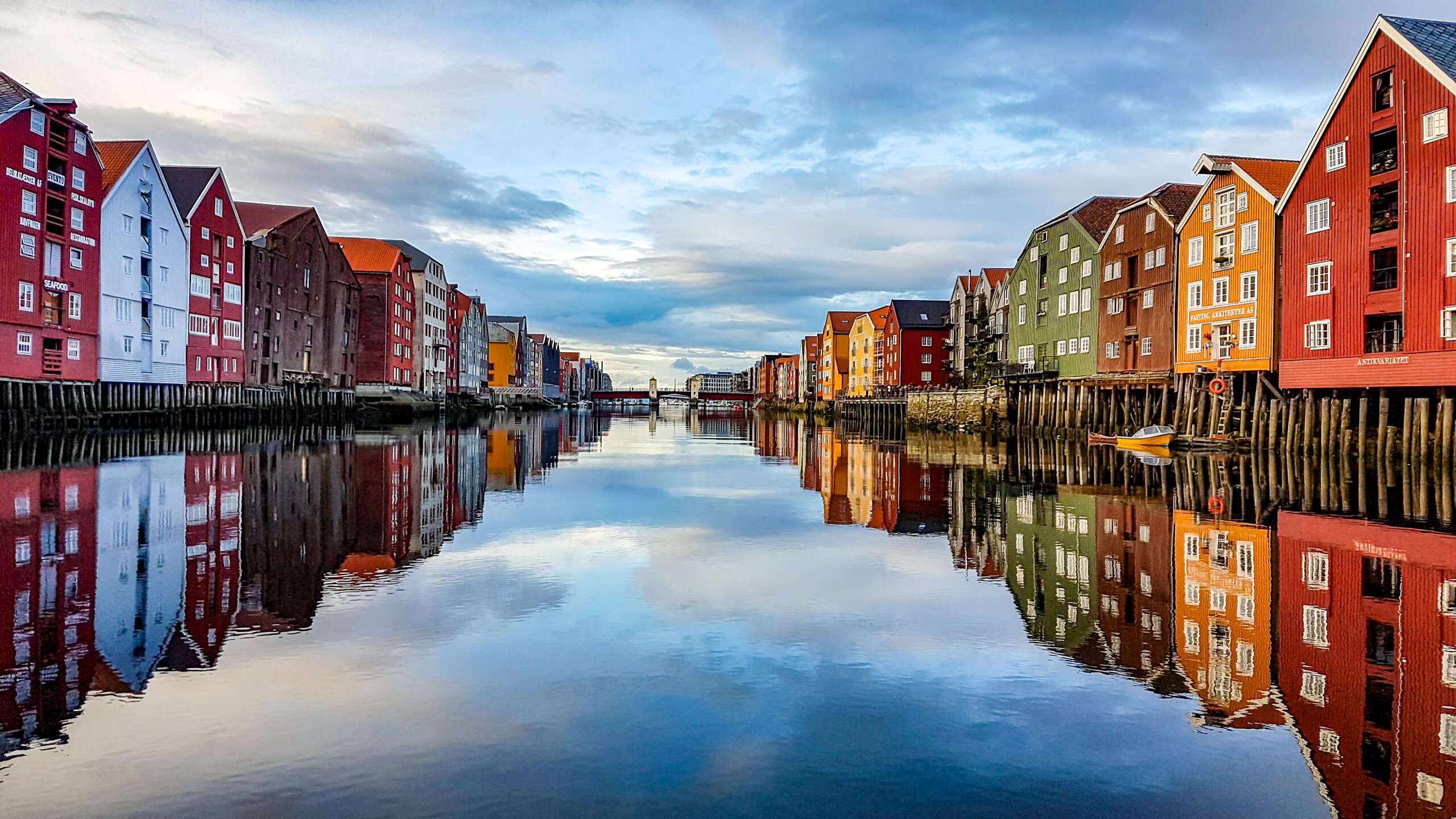
Trondheim combines historical charm with student-friendly pricing. The city’s large student population creates a competitive accommodation market, benefiting students. Furthermore, excellent cycling infrastructure reduces transport expenses significantly.
Stavanger
Stavanger, while known for its oil industry wealth, offers competitive student accommodation through housing organisations. Moreover, the city’s international character provides excellent networking opportunities for future careers.
Other small towns
Smaller towns like Ås, Gjøvik, or Volda offer the most affordable options. However, limited accommodation choices require early applications. Additionally, fewer part-time job opportunities may affect income potential.
4 Norwegian Universities Exploration
Oslo Metropolitan University (OsloMet)
OsloMet is Norway’s largest university of applied sciences, offering over 200 programmes with a strong focus on professional practice and innovation.
Non-EU/EEA students pay an annual tuition fee of 120,000–160,000 NOK (~€11,500–€15,500) for bachelor’s programmes and 140,000–180,000 NOK (~€13,500–€17,500) for master’s programmes.
Its Bachelor of Computer Science and Master of Environmental Management are renowned for integrating real-world industry projects. OsloMet also excels in health sciences and social work, with partnerships across Nordic healthcare systems.
Norwegian University of Science and Technology (NTNU)
As Norway’s top technical university, NTNU leads in engineering, computer science, and natural sciences.
Non-EU/EEA students pay 100,000–150,000 NOK (~€9,700–€14,500) annually for master’s programmes like Marine Technology and Sustainable Energy Engineering. Its Bachelor of Electrical Engineering emphasises hands-on research, often collaborating with SINTEF,
Scandinavia’s largest research institute. NTNU’s PhD programmes remain tuition-free for all students, supported by strong industry ties in renewable energy and Arctic technology.
BI Norwegian Business School
BI is Norway’s premier private business school, accredited by AACSB, EQUIS, and AMBA.
Non-EU/EEA students pay 120,000–160,000 NOK (~€11,500–€15,500) annually for bachelor’s programmes (e.g., Bachelor of Data Science for Business) and 140,000–180,000 NOK (~€13,500–€17,500) for master’s programmes like MSc in Business Analytics. BI’s MBA programs, offered in partnership with Fudan University, cost 508,000 NOK (~€49,000).
The school is globally recognised for entrepreneurship and sustainable finance, with alumni networks spanning multinational corporations.
University of Bergen
Ranked among the top 300 universities globally in 2025, the University of Bergen excels in marine research and climate studies.
Non-EU/EEA students pay 80,000–125,000 NOK (~€7,700–€12,100) annually for bachelor’s programmes and 125,000–150,000 NOK (~€12,100–€14,500) for master’s programmes like Marine Biology and Arctic Studies.
Its Master of Public Health integrates cross-disciplinary approaches to address global health challenges. The university’s location near the fjords provides unique field research opportunities.
Note:
1. Tuition fees are subject to annual adjustments. EU/EEA students typically pay only registration fees (~500–600 NOK/semester) at public universities.
2. Private institutions like BI charge higher fees but offer scholarships covering up to 100% of tuition.
Scholarship Opportunities and Financial Aid Options
Student scholarships for a semester in Norway are available through various sources, though competition is intense. The Norwegian government, universities, and international organisations offer different scholarship programmes for worthy candidates.
Erasmus+ funding
Erasmus+ funding for studying in Norway provides substantial support for EU students.
These grants typically cover travel costs and provide monthly allowances ranging from 300 to 500 euros. Additionally, Erasmus+ participants often receive priority access to student accommodation.
Norwegian State Scholarships
While Norway doesn’t offer general scholarships for full degrees to the same extent as some countries, there are specific programmes and bilateral agreements that provide funding.
The Norwegian Agency for International Cooperation and Quality Enhancement in Higher Education (Diku), now part of the Directorate for Higher Education and Skills, is a key resource. Check their website for programmes or specific agreements with your home country.
University-Specific Scholarships
Many Norwegian universities offer a limited number of scholarships or grants, often for specific programmes or students from particular regions.
It is vital to check the international student pages of the universities you are interested in. These are often merit-based or target-specific fields of study.
Read More: Your Complete Guide to Studying in Norway as a Foreigner: Everything You Need to Know
Home Country Scholarships
Your home country may offer scholarships for studying abroad. Consequently, researching national and regional programmes before departure can provide substantial financial support. Additionally, some employers sponsor educational sabbaticals for professional development.
Private foundations
Private foundations and corporations also offer scholarships for international students. Many Norwegian companies sponsor students from specific countries or academic fields. Furthermore, industry-specific organisations often provide targeted support for relevant studies.
Part-Time Job Opportunities for Students in Norway
Offline part-time job
Part-time job opportunities for students in Norway exist, but regulations limit working hours for non-EU students. International students can work up to 20 hours weekly during term time and full-time during holidays.
The minimum wage in Norway is relatively high, typically around 180-200 NOK (£15-17) per hour for student positions. Therefore, even limited working hours can provide meaningful income to supplement your budget.
Popular student jobs include retail positions, hospitality work, tutoring, and research assistance. Additionally, many universities offer on-campus employment opportunities specifically for international students. Furthermore, language skills in Norwegian or other European languages increase job prospects significantly.
However, balancing work with studies requires careful planning. Moreover, finding employment may take several weeks or months after arrival. Consequently, having sufficient funds for your entire semester without relying on employment income is essential.
Remote work opportunities
Remote work opportunities allow students to continue their existing employment from their home countries.
Nevertheless, tax implications and time zone differences may complicate such arrangements. Therefore, consulting with tax professionals ensures compliance with both Norwegian and home country regulations.
Practical strategies for Affording a semester in Norway
Student Discount Cards in Norway for Cost-Saving
Student discount cards in Norway for cost-saving provide substantial benefits across various sectors.
Student Identity Card
The International Student Identity Card (ISIC) offers discounts on transport, entertainment, shopping, and dining throughout Norway.
Norwegian retailers and service providers offer specific student discounts. Consequently, always inquire about student rates before making purchases. Additionally, many businesses offer special student days with enhanced discounts.
Transport discounts
Transport discounts represent some of the most valuable student benefits. Most public transport systems offer student rates that reduce costs by 30-50%. Furthermore, some regions provide free or heavily subsidised transport for students.
Activities discounts
Cultural activities and entertainment often feature student pricing. Therefore, accessing museums, cinemas, concerts, and sporting events becomes more affordable. Moreover, many venues offer special student nights with additional discounts.
Digital services and software frequently provide student discounts. Consequently, subscriptions for music, video streaming, and productivity software become more affordable. Additionally, academic software often comes free or at significant discounts for students.
Understanding Visa Financial Requirements and Proof
Norwegian visa requirements mandate demonstrating sufficient financial resources before arrival. Specifically, students must prove access to approximately 123,519 NOK (£10,500) for a semester-long stay. This amount covers living expenses but doesn’t include tuition fees, where applicable.
The financial proof must be readily accessible, not just theoretical wealth. Therefore, bank statements, scholarship letters, or sponsor declarations serve as acceptable documentation. Additionally, the funds must remain available throughout your stay.
Family sponsors can provide financial guarantees, but this requires specific documentation. Consequently, sponsor letters must include detailed financial information and legal commitments. Moreover, some embassies require sponsors to provide additional verification documents.
Planning your financial proof early prevents visa delays. Therefore, gathering necessary documents months before the application ensures smooth processing. Additionally, having backup financial documentation provides security if primary sources encounter issues.
Budget Planning for Studying a Semester in Norway
Budget planning for studying a semester in Norway requires careful consideration of all potential expenses. Creating a detailed monthly budget helps identify areas for potential savings while ensuring adequate coverage of essential needs.
Fixed costs include accommodation, insurance, semester fees, and visa expenses. These typically account for 60-70% of your total budget. Subsequently, variable costs like food, transport, and entertainment fill the remainder.
Creating contingency funds for unexpected expenses is essential. Consequently, budgeting an additional 10-15% above your calculated needs provides security against unforeseen costs. Moreover, this buffer allows for occasional recreational activities without financial stress.
Tracking expenses throughout your semester helps identify spending patterns. Therefore, using budgeting apps or spreadsheets keeps you accountable to your financial plan.
Additionally, regular reviews allow for adjustments when necessary. Monthly budget reviews enable course corrections before problems escalate.
Identifying successful cost-saving strategies allows for their continuation and expansion. Similarly, recognising overspending areas enables prompt corrective action.
Conclusion
With careful planning and strategic budgeting, international students can successfully afford a semester in Norway. The combination of tuition-free public education, available scholarships, part-time work opportunities, and smart budgeting makes this Nordic adventure achievable for determined students.
The investment in studying in Norway extends far beyond the immediate costs. The experience provides an invaluable international perspective, language skills, and professional networks that benefit your entire career. Therefore, with proper financial planning, you can afford a semester in Norway whilst gaining experiences that last a lifetime.
FAQs
Is Norway friendly to international students?
Norway is renowned for its high-quality education system and teaching methods, as well as its friendly environment towards international students. The courses are taught in English, and most students can enjoy scholarships, making higher education more affordable.
Can I work in Norway while studying?
If you are granted a study permit, you are automatically also granted permission to work part-time for up to 20 hours per week, including remote work, in addition to your studies and full-time during holidays.
Can I bring my family to Norway while studying?
Your spouse or cohabitant and children can usually apply to come and live with you in Norway if you can obtain permission to live here yourself.

As the lead contributor to this platform, I bring over 15 years of experience navigating the dynamic landscape of higher education. Through this platform, I deliver rigorously researched content on emerging trends in studying abroad, lifelong learning and cross-cultural competency development. Every article integrates practical knowledge, study resources, and case studies that empower stakeholders to make informed decisions.