Whether you’re aiming for a global corporate career, entrepreneurial success, or a deep dive into Asia’s booming business landscape, Japan stands out as an exceptional MBA destination. With prestigious universities, strong industry connections, and a unique learning environment, it’s no surprise that more international students are choosing Japan for their Japan MBA ranking journey.
Dreaming of an MBA that blends world-class education with unparalleled cultural immersion? Look no further—Japan’s top universities offer exactly that, and we’ve listed the best Japan MBA Ranking top universities for you! In this guide, we’ll walk you through the top-ranked MBA in Japan for international students, what makes them special, and key factors to help you pick the right one. So, let’s get started!
Why Choose to Do Your MBA in Japan MBA ranking?
Before diving into the Japan MBA rankings, let’s explore why Japan is such an attractive MBA destination.
1. Globally Recognised Education
Japan MBA ranking colleges are rapidly climbing global rankings, with several institutions earning AACSB and EQUIS accreditation—the gold standard for business education. This means your degree will be respected worldwide.
2. Strong Corporate Connections
Studying in Japan gives you direct access to Fortune 500 companies like Toyota, Sony, and SoftBank. Many Japanese MBA programmes include internships, corporate projects, and networking events, boosting your career prospects.
3. Unique Cultural & Business Perspective
Japan’s business culture blends traditional values with cutting-edge innovation. Learning here equips you with a rare East-meets-West business mindset, highly valued in today’s global economy.
4. Affordable Compared to Western MBAs
Compared with some Western MBA programmes, MBA programmes in Japan are relatively affordable. This affordability makes Japan an attractive destination for international students seeking a high-quality education without the exorbitant price tag associated with many Western universities. In addition to lower tuition fees, students in Japan can benefit from a cost-effective living environment, especially in cities outside of Tokyo. Accommodations, transportation, and daily living expenses can be significantly lower compared to major cities in Western countries.
Read More: International Business Degrees in Canada: Top Universities, Suitability and Career Path
4 Top Universities for MBA in Japan Ranking
| University | Japan MBA rankings | Tuition (2 Years) | Admission Requirements |
| University of Tokyo | 1 | ¥4,000,000 (~£21,000) | Bachelor’s degree; GMAT(Graduate Management Admission Test) recommended; TOEFL 90/IELTS 6.5 or above 2 years of work experience or above. |
| NUCB Business School | 2 | ¥3,900,000 (~£20,600) | Bachelor’s degree; GMAT 550 or above (waivers available); TOEFL 80/IELTS 6.0 or above Work experience preferred. |
| Hitotsubashi ICS | 3 | ¥5,200,000 (~£27,500) | Bachelor’s degree; GMAT 650 or above TOEFL 100/IELTS 7.0 or above 3 years of work experience or above. |
| Waseda Business School | 4 | ¥5,600,000 (~£29,600) | Bachelor’s degree GMAT 600 or above (recommended); TOEFL 90/IELTS 6.5 or above 3 years of work experience or above. |
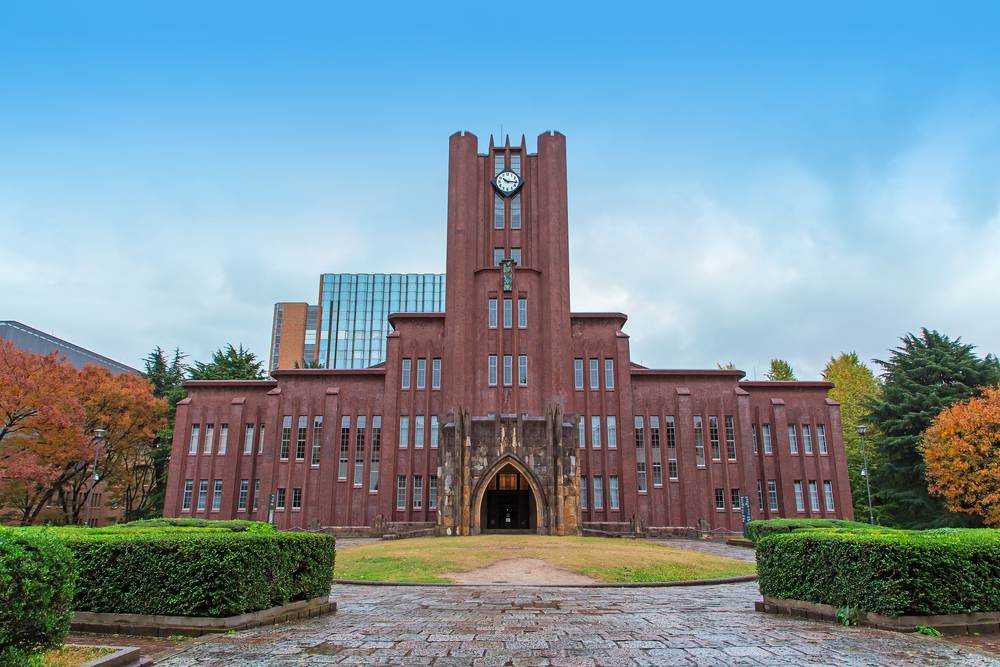
The University of Tokyo (Todai)
Renowned as Japan’s top-ranked university (QS 2024), the University of Tokyo offers an MBA programme combining academic rigour with corporate connectivity. The programme excels in case-study methodologies and boasts partnerships with Tokyo-based giants like Mitsubishi and SoftBank. Moreover, a growing number of English-taught MBA courses makes it accessible for international students. Scholarships include the MEXT Scholarship, covering full tuition and a monthly stipend, and university-specific fellowships. The University of Tokyo is a Japanese MBA ranking one that is suitable for those who want prestige and a powerful alumni network.
NUCB Business School
Ranked 2 in Japan’s MBA ranking, NUCB Business School offers the most affordable top-tier MBA at ¥3,900,000 (~£20,600) for two years. With AACSB-accredited status, the programme uses the Harvard case-study method in 90% of classes and partners with Nagoya-based corporations like Toyota. Scholarships include NUCB Merit Awards (up to ¥1,000,000) and Toyota-sponsored funding. NUCB Business School is best for Students who want a hands-on, case-based MBA at a lower cost.
Hitotsubashi ICS
Ranked 3 in Japan’s MBA ranking, Hitotsubashi ICS is celebrated for its Harvard-style case-method teaching and focus on global business strategy. Additionally, Hitotsubashi ICS specialises in its Small class sizes style ensuring personalised attention. Best for Students who are pursuing an MBA in Japan, Hitotsubashi ICS encourage students to thrive in an intimate, discussion-driven learning environment.
Over 30% of graduates join top consulting/finance firms like McKinsey and Goldman Sachs. Scholarships such as the ICS Merit Awards (up to 50% tuition waiver) and JASSO funding support international students.
Waseda Business School
Waseda Business School ranks 4 in Japan’s MBA ranking and stands out for its highly international cohort (40% foreign students). Its strengths include dual-degree partnerships with institutions like ESSEC (France) and a focus on tech and digital business. Scholarships such as the Waseda MBA Scholarships (20-100% coverage) and MEXT funding are available. Waseda Business School is one of the best universities in Japan, which is best for those seeking a diverse, globally connected MBA experience.
Japan MBA Ranking Course and College Recommendations
Colleges in Japan offer different types of MBA programmes catering to different students studying MBAs in Japan. Below, we break down the main course types of MBA programmes in Japan and recommend the best MBA universities in Japan for each.
1. Full-Time MBA (2 Years)
Full-time MBA courses in Japan are suitable for career switchers or those seeking a deep immersion in business education.
| Recommended Schools | Key Strengths | Entry Requirements |
| The University of Tokyo | 1. Strong corporate partnerships. (e.g. Mitsubishi, Nomura)
2. Focus on economics and global strategy. 3. Access to Tokyo’s business hub. |
Bachelor’s degree
GMAT or GRE (recommended) English proficiency (TOEFL 90/IELTS 6.5 or above) Work experience (2 years preferred) |
| Hitotsubashi ICS | 1. Case-study heavy. (like Harvard Business School)
2. Strong consulting and finance recruitment. 3. Small class sizes. (50 students per year) |
Bachelor’s degree
GMAT 650 or above (average) TOEFL 100/IELTS 7.0 or above 3 years of work experience |
2. One-Year Accelerated MBA
One-Year Accelerated Japanese MBA is best for: Professionals wanting a fast-track MBA without long career breaks.
| Recommended Schools | Tuition Fees for MBA (1 year) | Key Strengths | Entry Requirements |
| Keio Business School (KBS) | ~¥4,800,000 (£25,500) | 1. Entrepreneurship-focused (strong startup links)
2. Tokyo-based networking (alumni at Rakuten, SoftBank) 3. Scholarships: Keio MBA Fellowship. (up to ¥2,000,000) |
Bachelor’s degree;
GMAT 600 or equivalent GRE; 5 years of work experience; TOEFL 90/IELTS 6.5 or above. |
| Globis University (Tokyo) | ~¥3,800,000 (£20,000) | 1. 100% in English.
2. Practical, leadership-focused curriculum 3. Globis Merit Scholarship (up to 50% off) |
Bachelor’s degree;
No GMAT required (but recommended) 3 years of work experience TOEFL 80/IELTS 6.0 or above |
3. Executive MBA (EMBA)
Executive MBA in Japan offers courses best for mid-career professionals aiming for senior leadership.
| Recommended Schools | Tuition (1 year) | Key Strengths | Entry Requirements |
| Waseda Business School | ~¥6,500,000 (£34,500) for 2 years (part-time) | 1. Weekend/evening classes for working professionals
2. Strong Asia-Pacific business focus 3. Waseda EMBA Grant (partial tuition support) |
Bachelor’s degree;
8 years of work experience or above; Managerial experience preferred. TOEFL 90/IELTS 6.5 or above. |
| NUCB Business School | ~¥5,200,000 (£27,600) for 18 months | 1. AACSB-accredited
2. Hybrid (online or in-person) option 3. NUCB Corporate Scholarship (sponsored by Japanese firms) |
Bachelor’s degree;
7 years of work experience or above; Interview and essay submission. |
4. Online MBA/ Part-Time MBA
The International University of Japan (IUJ), ranked among Japan’s Top 10 MBA programmes (Eduniversal 2024), offers a flexible Online MBA designed for professionals balancing work and study. With a tuition fee of ¥2,500,000 (~£13,200) for two years, the programme requires applicants to hold a bachelor’s degree, demonstrate 3+ years of work experience, and submit TOEFL 79 or IELTS 6.0 scores for non-native English speakers. Its standout features include a 100% online delivery format (with optional campus visits) and a curriculum emphasising digital business transformation and AI-driven strategies, ideal for tech-focused careers. Additionally, IUJ supports students through the Distance Learning Grant, offering up to a 30% tuition reduction to eligible candidates. This programme combines affordability with cutting-edge specialisations, making it a strong choice for professionals seeking to upskill without pausing their careers.
Eligibility Criteria or Requirements for MBA Colleges in Japan
Academic Qualifications of Students Applying for an MBA
| Bachelor’s Degree | A completed undergraduate degree from an accredited institution. |
| Minimum GPA | Most schools require a GPA of 2.5/4.0 or equivalent (e.g. 70% in some systems). |
| Transcripts | Official transcripts must be submitted, often translated into English or Japanese. |
Work Experience
| Standard Requirement | 2–5 years of professional experience, depending on the programme. |
| Full-Time Japan MBA ranking | 2–3 years (e.g., Hitotsubashi ICS). |
| Executive Japan MBA ranking | 8+ years (e.g., Waseda Business School) |
Exceptions: Some schools, like NUCB, accept applicants with little/no work experience but prioritise those with career exposure.
Language Proficiency
| English-Taught Programmes | TOEFL iBT: 79–100 or above (e.g. IUJ requires 79 or above, Hitotsubashi ICS requires 100 or above). |
| IELTS: 6.0–7.0 or above (e.g., Keio Business School: 6.5 or above). | |
| Japanese-Taught Programmes | JLPT N1/N2: Required for fluency (rarely needed for English MBAs). |
Read More: IELTS vs PTE vs TOEFL Score Comparison: Which Test is Right for You?
Standardised Tests
Some Japanese MBA-ranking universities will ask for GMAT/GRE test scores. Such as Hitotsubashi ICS ( Average GMAT 650 or above) and Keio Business School(GMAT 600 or equivalent GRE). However, there are waivers available that Japanese universities like Globis University and NUCB may waive the GMAT for strong professional or academic profiles.
Application Materials
| Essays/Personal Statement | Career goals, leadership experience, and reasons for choosing the programme. |
| Recommendation Letters | 2–3 references (academic or professional). |
| Resume/CV | Highlighting work experience, achievements, and skills. |
| Interview | Required by most of Japan’s top MBA universities (e.g. Waseda, Todai). |
Special Eligibility for MBA in Japan
| Executive MBAs | Proof of managerial experience (e.g. Waseda EMBA requires 8 years of experience with leadership roles). |
| Online MBAs | Demonstrated ability to manage remote learning (e.g., IUJ’s Online MBA). |
| Scholarship Applications | Additional essays or financial need documentation (e.g. MEXT Scholarship). |
Studying MBA in Japan: any future feedback?
Embarking on an MBA at top MBA universities in Japan offers far more than academic enrichment—it’s a transformative journey that equips graduates with globally recognised skills, cross-cultural fluency, and unrivalled career opportunities. With Japan’s business schools climbing international rankings, students gain access to programmes that blend East-meets-West business practices, innovative teaching methods, and strong corporate ties. Let’s explore the long-term benefits of a Japanese MBA, from career trajectories to salary potential.
Gains from a Japanese MBA Programme
Firstly, studying at a Japan MBA-ranking university, such as the University of Tokyo or Hitotsubashi ICS, provides a rigorous education grounded in strategic thinking and practical application. Japanese students and international students often highlight the development of leadership skills through case studies, team projects, and internships with firms like Toyota or Sony. For example, Hitotsubashi ICS’s Harvard-style case method hones decision-making abilities, while Keio Business School’s entrepreneurship focus fosters innovation.
Additionally, the cultural immersion inherent to studying in Japan is invaluable. Students learn to navigate Japan’s unique business etiquette, which prioritises consensus-building and long-term relationships—a skill highly prized by multinational employers.
Moreover, Japan’s MBA programmes often include language training and exchange opportunities with partner universities like INSEAD or MIT, broadening graduates’ global perspectives. This combination of academic rigour and cultural exposure positions alumni for leadership roles in diverse industries.
Career Directions Post-MBA in Japan MBA ranking university
A Japanese MBA opens doors to high-demand sectors both within Japan and internationally. Below are the most popular career paths:
1. Consulting & Finance:
Graduates from schools like Hitotsubashi ICS and the University of Tokyo are heavily recruited by firms such as McKinsey, Goldman Sachs, and Nomura. These roles leverage Japan’s reputation for analytical rigour and strategic planning.
2. Technology & Innovation:
With Japan’s tech sector booming, MBAs specialising in digital transformation or AI (e.g. Globis University graduates) find opportunities at firms like SoftBank, Rakuten, and Panasonic.
3. Entrepreneurship:
As one of the best MBA business schools in Japan, Keio Business School’s startup incubator has launched ventures in fintech, green energy, and e-commerce, supported by Tokyo’s vibrant entrepreneurial ecosystem.
4. Global Supply Chain & Manufacturing:
Nagoya-based schools like NUCB partner with automotive giants like Toyota, offering roles in operations and sustainability management.
5. Social Impact & Sustainability:
Kyoto University’s MBA in Sustainable Business prepares graduates for roles in ESG (Environmental, Social, Governance) consulting and renewable energy sectors.
Importantly, 86% of MBA graduates secure employment within three months of graduation, with many transitioning into senior roles (MBA Employment Report 2024).
Salary Prospects
The financial return on a Japanese MBA is compelling. While salaries vary by industry and experience, graduates from top MBA colleges in Japan typically see a 50–100% increase in pre-MBA earnings.
| Career | Salary Range |
| Consulting/Finance | ¥12–18 million per year (£63,000–£95,000) |
| Technology | ¥10–15 million per year (£53,000–£79,000) |
| Global Supply Chain & Manufacturing | ¥8–12 million per year(£42,000–£63,000) |
| Social Impact & Sustainability | ¥7–10 million per year(£37,000–£53,000) |
| Entrepreneurship | Variable but often exceed ¥15 million/year post-scaling (Japan Venture Capital Association, 2023) |
Note:
1. Senior Roles: Salaries for executives (e.g. C-suite) often exceed ¥20 million per year (£106,000 or above) in sectors like finance and tech.
2. Bonuses: Many roles include performance-based bonuses (e.g. over 10–30% of base salary in consulting and tech).
Why a Japanese MBA Stands Out
In summary, Japan MBA-ranking universities offer a unique blend of academic excellence, cultural depth, and career acceleration. Whether you aim to lead in finance, innovate in tech, or drive sustainable change, Japan’s top-ranked programmes provide the tools and networks to succeed. With competitive salaries, strong industry demand, and a global alumni community, the return on investment is both financial and transformational.
Key Factors to Consider When Choosing a Japan MBA Ranking Programme
Selecting the right Japan MBA programme is an exciting opportunity to align your career aspirations with a world-class education, but it requires thoughtful evaluation of several key factors.
1. Curriculum and Specialisations
Does the programme focus on finance, tech, entrepreneurship, or global business? Pick one that aligns with your career goals. Prioritise programmes with strong industry connections and accreditations will help a lot (e.g., AACSB or EQUIS), as these ensure global recognition and access to internships with firms like Toyota or Sony. For instance, Hitotsubashi ICS and Keio Business School boast partnerships with Fortune 500 companies, directly enhancing graduate employability.
Another critical aspect is the curriculum specialisation—whether it aligns with your goals, such as entrepreneurship at Keio, sustainability at Kyoto University, or tech innovation at Globis.
2. Location and Cost
Location also plays a role: urban campuses like Waseda in Tokyo offer unrivalled networking, while schools in Nagoya or Kyoto provide cost-effective living and niche industry access. Equally important are tuition affordability and scholarships. While Japan’s MBA fees (cost of studying Japan MBA ranking programme) are generally lower than those in the US or UK (averaging ¥3.9–6.5 million, or £20,600–34,500), many universities in Japan offer international students scholarships (such as NUCB and the University of Tokyo) like the MEXT grant, which can cover up to 100% of costs (Financial Times, 2024).
3. Career Support & Alumni Network
Look for strong career services and employer connections. A powerful alumni network can open doors globally.
Consider the alumni network and career support—Japan MBA ranking top schools like Hitotsubashi ICS report over 80% of graduates securing roles within three months, often in consulting or finance.
4. Language Requirements
Assess the language of instruction: while many Japan MBA ranking programmes are English-taught, basic Japanese proficiency can enrich cultural integration and local job prospects. By balancing these factors—academic rigour, financial feasibility, and career alignment—you can choose a programme that not only elevates your credentials but also immerses you in Japan’s unique blend of tradition and innovation.
Many MBAs are fully in English, but basic Japanese helps with daily life and local job opportunities.
Final Thoughts: Is a Japan MBA Right for You?
Choosing to pursue an MBA in Japan could be the transformative career move you’ve been seeking, particularly if you value a unique blend of global education and cultural immersion.
1. With programmes ranked among Asia’s best, Japan’s MBA-ranking universities offer more than academic rigour—they provide a gateway to understanding East-meets-West business practices, a skill increasingly prized in multinational roles. For instance, graduates from Hitotsubashi ICS or the University of Tokyo frequently highlight how their exposure to Japan’s consensus-driven corporate culture enhanced their leadership versatility. Moreover, Japan’s MBA programmes are notably affordable compared to Western counterparts.
2. Career outcomes further bolster the appeal: over 86% of MBA graduates secure roles within three months, often in high-growth sectors like consulting, tech, or sustainability. Salaries post-graduation are equally compelling.
3. A Japanese MBA is ideal if you seek global recognition, cultural fluency, and strong ROI in a dynamic job market. Whether you aim to lead in Tokyo’s corporate hubs, launch a startup, or drive sustainable change, Japan’s blend of tradition and modernity creates unparalleled opportunities.
If you want an affordable, high-quality MBA with global recognition and a unique cultural edge, Japan is an outstanding choice. Whether you’re drawn to Tokyo’s corporate buzz, Kyoto’s tradition, or Nagoya’s innovation, there’s a perfect programme for you.
FAQs About Pursuing an MBA in Japan
Do I need to speak Japanese?
Not always! Many Japan MBA ranking programmes are taught entirely in English, but learning basic Japanese will enhance your experience and job prospects. MBA graduates with strong Japanese language skills may gain quicker access to full-time offers. However, most Japanese MBA graduates taught in English for international are also lead to important roles in global companies with bilingual work environments.
What’s the job market like after graduation?
Japan has a growing demand for international talent, especially in finance, tech, and consulting. Many graduates land roles at global firms or Japanese corporations expanding overseas.
How does Japan compare to MBAs in the US or Europe?
Lower cost than US/UK MBAs. A unique business culture that’s highly valued in Asia-focused careers. Strong ROI for those wanting to work in Japan or across Asia.

As the lead contributor to this platform, I bring over 15 years of experience navigating the dynamic landscape of higher education. Through this platform, I deliver rigorously researched content on emerging trends in studying abroad, lifelong learning and cross-cultural competency development. Every article integrates practical knowledge, study resources, and case studies that empower stakeholders to make informed decisions.